
October 19, 2026
Concrete cracks and water leakage are common problems in buildings, basements, parking areas, water tanks, roofs, retaining walls, and other concrete structures. If left untreated, these problems can lead to water seepage, corrosion of reinforcement steel, deterioration of concrete, and costly repairs.
Injection grouting is an effective method for repairing concrete cracks and stopping water leakage when the appropriate injection material and repair technique are selected according to the site conditions.
What Is Crack and Leakage Treatment by Injection?
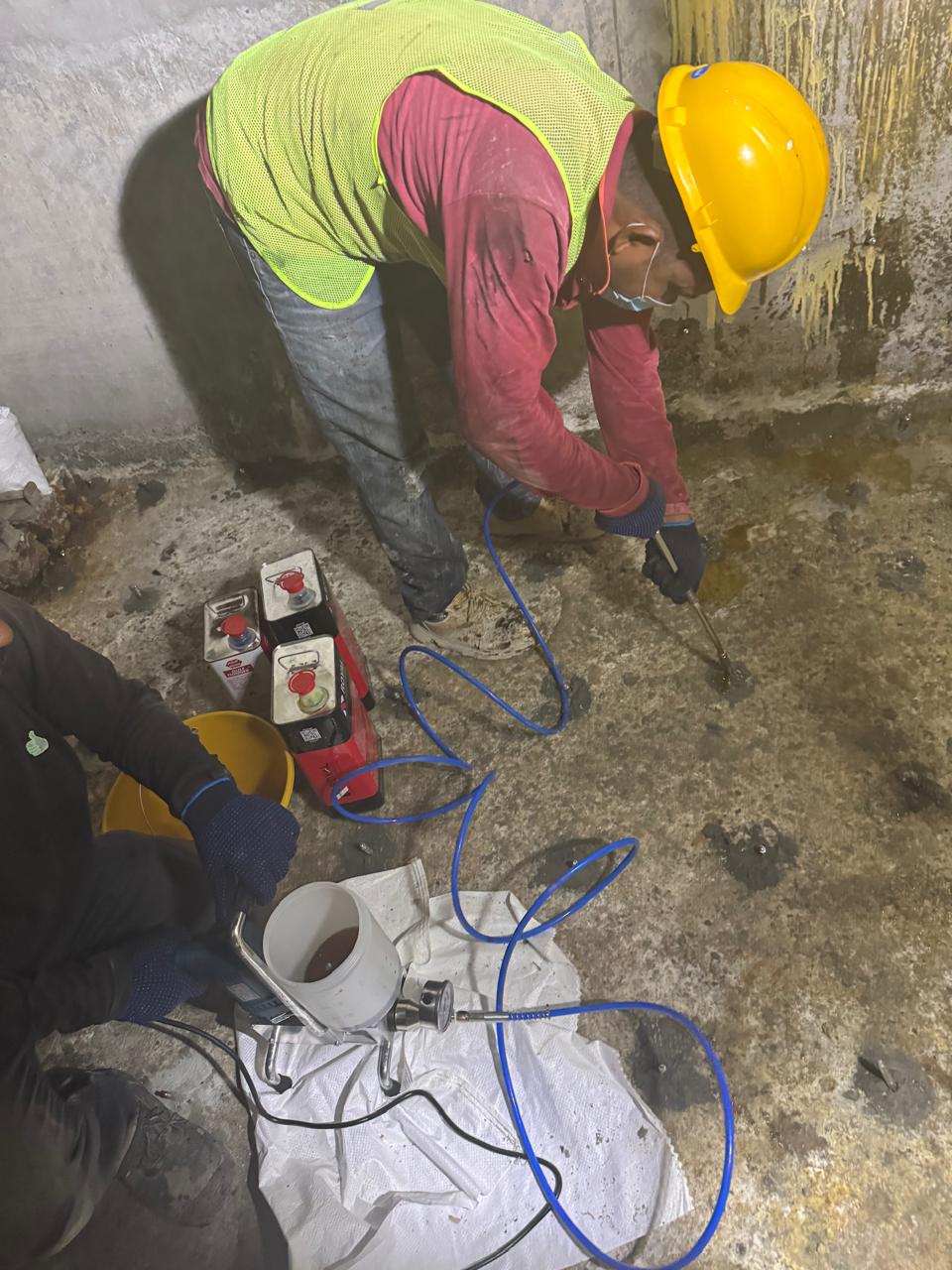
Injection treatment involves injecting a specially selected chemical or resin into cracks, joints, and other leakage paths in concrete under controlled pressure. The material penetrates the affected areas and seals the water passage or fills the crack, depending on the repair objective.
This method can often be carried out without extensive demolition, making it a practical solution for repairing existing concrete structures.
Types of Injection Materials
The selection of injection material depends on the nature of the crack, the presence of water, and the required performance.
1. PU Injection Grouting
Polyurethane (PU) injection is widely used to stop active water leakage through cracks and construction joints. Water-reactive polyurethane resins can expand and form a seal when they come into contact with water.
Typical applications:
* Basement wall leakage
* Underground parking structures
* Water seepage through concrete walls and slabs
* Construction joints and cold joints
* Cracks with active water ingress
2. Epoxy Injection
Epoxy injection is generally used to bond suitable structural cracks and restore continuity in concrete, subject to an engineering assessment. The crack condition, moisture level, and selected epoxy system must be considered before application.
Typical applications:
* Structural cracks in concrete beams and slabs
* Cracks in columns and walls
* Concrete elements requiring structural crack bonding
Epoxy injection is not normally the first choice for actively leaking cracks unless a specifically suitable system and procedure are established.
How Is Injection Treatment Carried Out?
A professional injection repair generally includes the following steps:
1. Site inspection: Identify the location, width, depth, and likely cause of the crack or leakage.
2. Surface preparation: Clean the affected area and prepare it for injection work.
3. Installation of injection packers: Drill holes at suitable intervals and install injection packers along the crack or leakage path.
4. Injection of material: Inject the selected PU resin or epoxy using suitable equipment and controlled pressure.
5. Sealing and curing: Allow the material to react or cure according to the manufacturer’s instructions.
6. Final inspection: Remove or finish the packers as required, repair the surface, and check the treated area for leakage.
The injection procedure may vary depending on the structure, water pressure, crack configuration, and material specifications.
Benefits of Concrete Injection Repair
* Helps stop water ingress through suitable cracks and joints.
* Minimizes the need for extensive demolition.
* Can be applied to difficult-to-access concrete areas.
* Helps protect concrete and reinforcement from further moisture-related deterioration.
* Provides a targeted repair solution for existing structures.
* Can reduce disruption compared with more extensive repair methods.
The effectiveness and durability of the repair depend on correct diagnosis, suitable materials, proper application, and addressing the underlying cause of the problem.
Why Professional Assessment Matters
Not every crack is caused by water ingress alone. Cracks may result from structural movement, settlement, shrinkage, thermal changes, or other factors. Simply sealing a crack without understanding its cause may lead to recurring leakage or further deterioration.
A professional inspection helps determine whether injection grouting is appropriate and whether additional waterproofing, joint repair, or structural remedial work is required.
Conclusion
Crack and leakage treatment by injection is a practical and targeted repair method for many concrete structures affected by water seepage. With the correct injection material, suitable application technique, and proper site assessment, it can help restore watertightness and extend the service life of the repaired area.
If your building, basement, parking area, water tank, or concrete structure is experiencing cracks or water leakage, arrange a professional site inspection to identify the problem and determine the most suitable repair solution.
Contact us for concrete crack injection, PU injection grouting, epoxy crack injection, and water leakage treatment services.